

The market came into the first quarter of 2026 with some continued strength. However, there was a rotational broadening of the market away from mega cap areas such as the MAG 7 (Amazon, Meta, Nvidia, Microsoft, Alphabet, Apple and Tesla) which had been dominating for some time. In addition, to areas such as developed world and emerging market international asset classes, strength could be seen in areas such as the equal weighted S&P 500 index as well as mid and small cap stocks. Further, gold continued to perform well.
Unfortunately, similar to last year the market experienced an abrupt selloff once again due to the Trump administration’s policy changes. On February 28th, the U.S. launched Operation Epic Fury alongside Israel. Subsequently, the market sold off, and equity asset classes dropped about 8–12%. In addition, as is depicted in the following chart, gold and the bond market didn’t provide any relief.
Major Asset Class Performance (%)
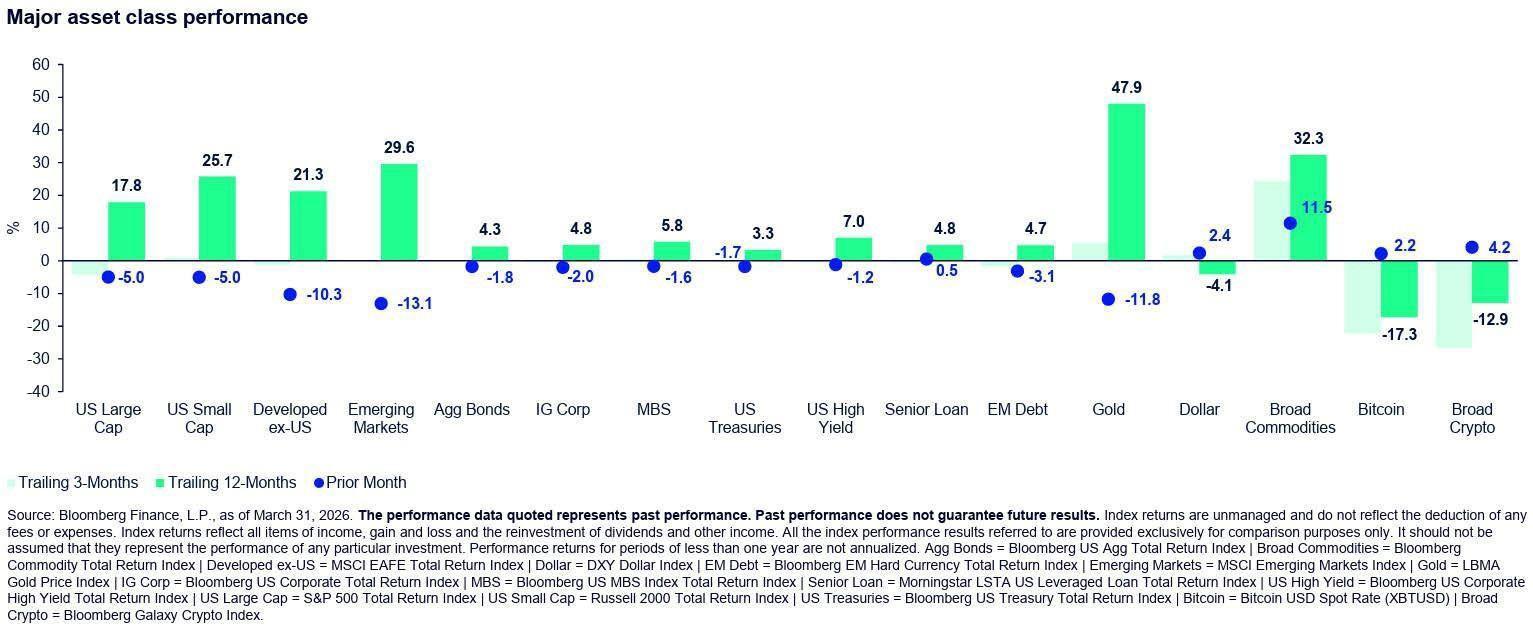
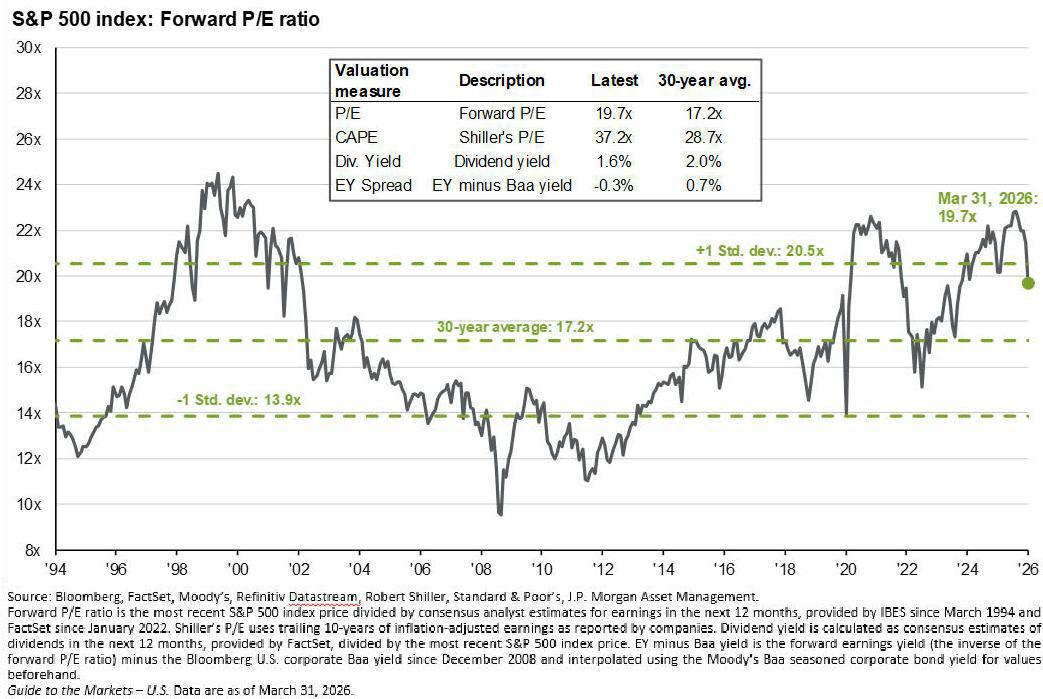
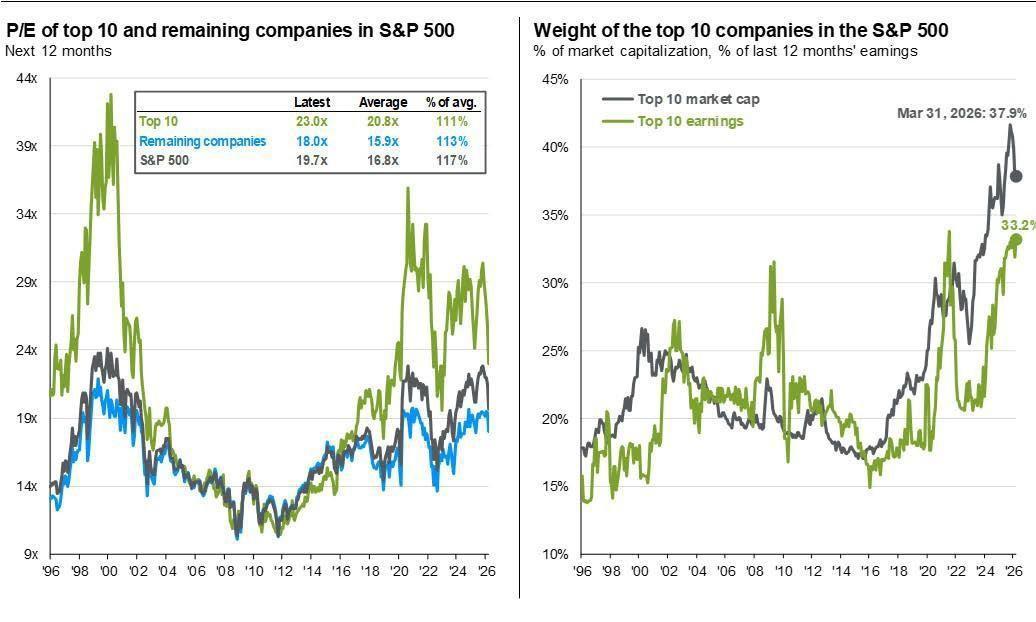
Similar to 2022, oil was one of the rare assets that appreciated due to concerns over disruptions to supply. Since the end of the quarter, the market has recovered its losses and has continued to make new highs. We have been writing for some time now that the market has been trading well above its historical multiples, particularly on a forward-looking basis. The good news is that, as reflected in the following chart, market forward valuations have eased back into a range closer to longer-term historical averages.
S&P 500 Index: Forward P/E Ratio

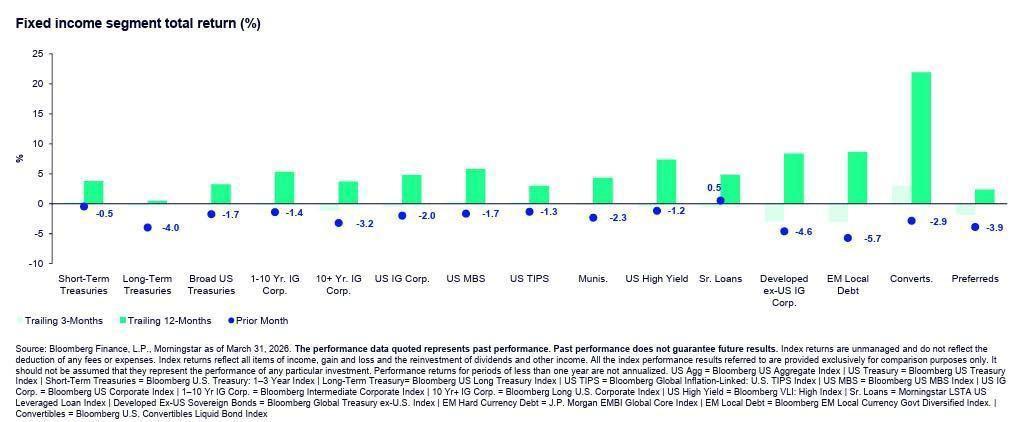
Fixed Income Segment Total Return (%)
Fundamental Portfolios
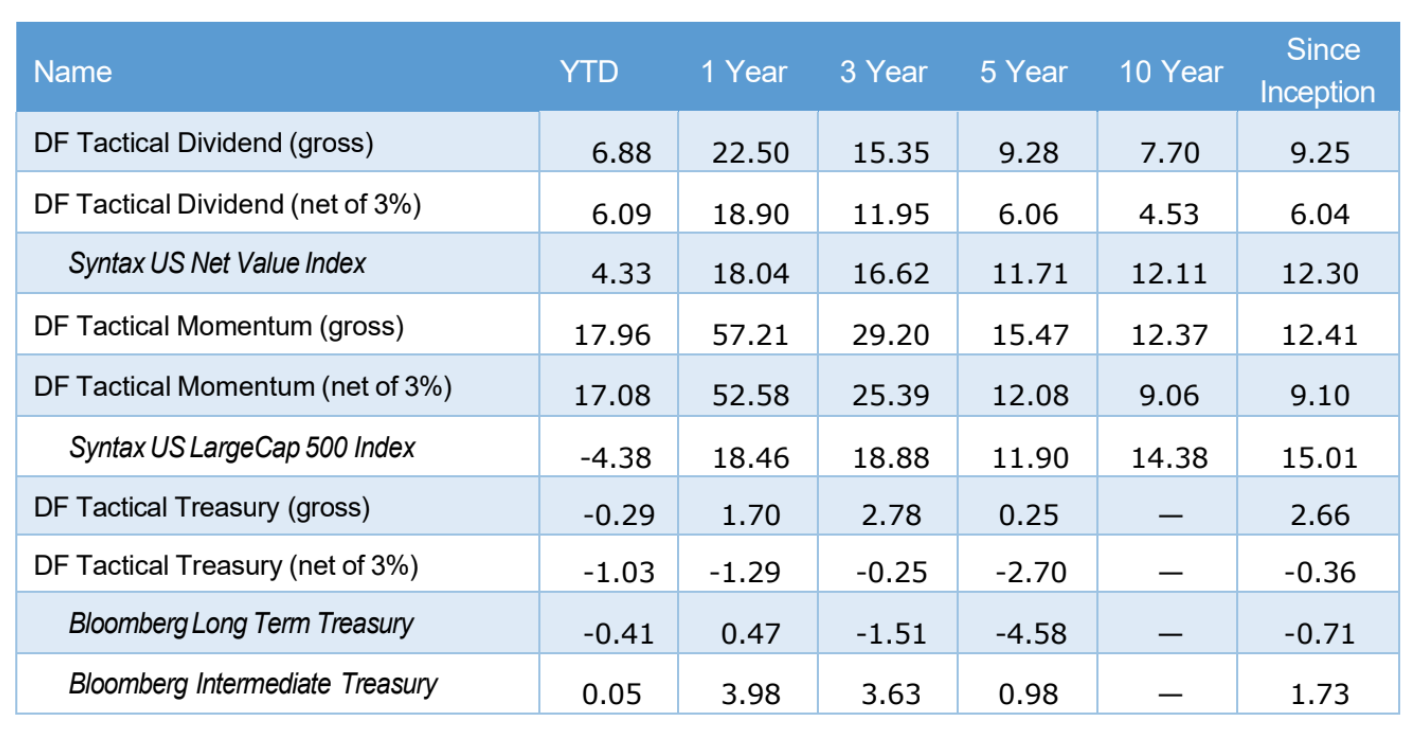
The investment committee came into the year with optimism regarding the equity markets. The team believed that Trump’s pro-growth policies would pave the way for additional growth and an eventual uptick in corporate profitability. In early January, the firm added to its equity exposure within the Global Tactical Allocation portfolios by increasing exposure to the DF Tactical 30 ETF, a mega-cap momentum strategy managed by Donoghue Forlines. The GT allocation portfolios had a very strong quarter, largely driven by their equity positions. In particular, the DF Tactical Momentum Fund showed strong performance, especially relative to the S&P 500 Index.
During the quarter, as previously mentioned, there was notable market volatility, which led to a decline in the S&P 500 Index of over 4%. The Global Tactical Portfolios also experienced some movement within their underlying fixed income allocations, driven by volatility stemming from a combination of private credit concerns particularly impacting bank loans and inflation concerns affecting duration-sensitive and high yield bonds.
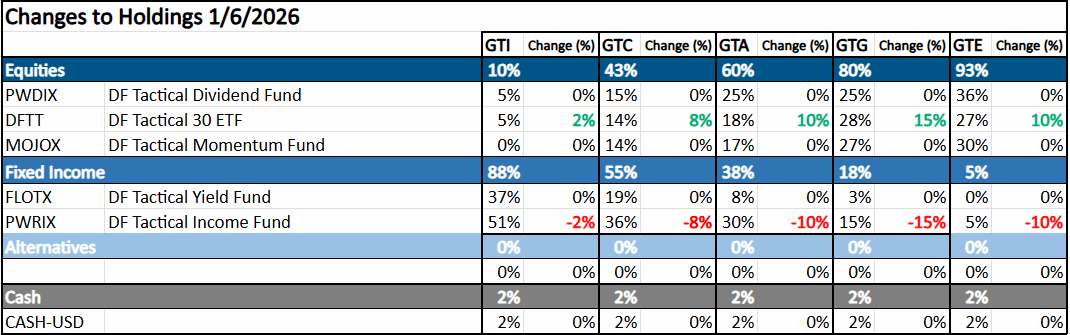
(Positioning as of 3/31/2026)
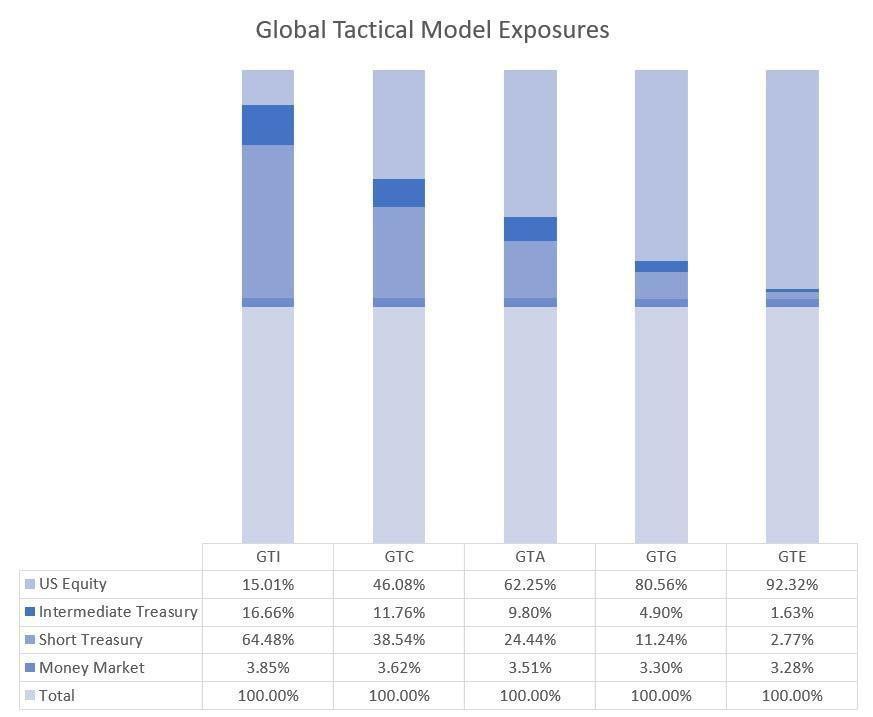
(Positioning as of 3/31/2026)
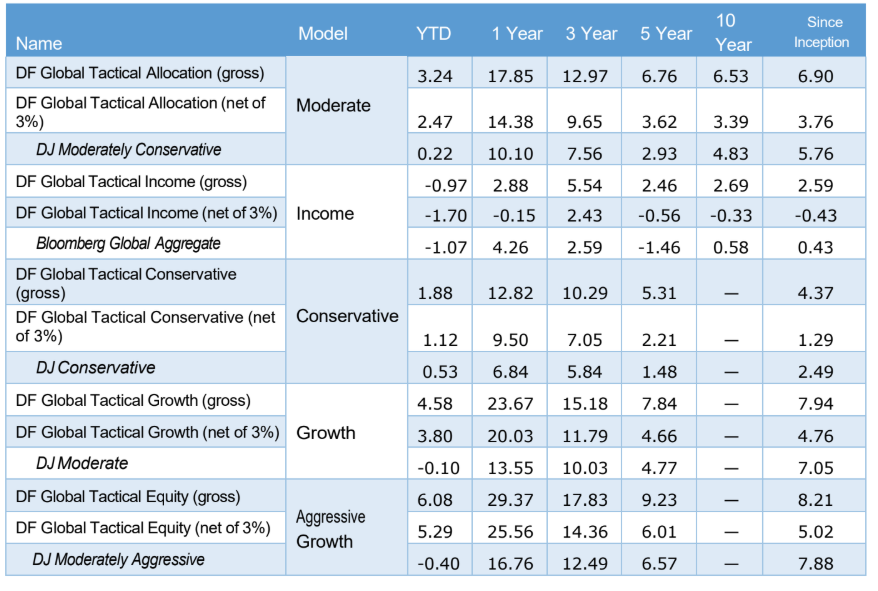
Rules Based Portfolios
The DF Tactical Momentum and DF Tactical Dividend SMA strategies performed very well in the first quarter and continued to do so into the third week in April. As previously mentioned, the market was seeing a broadening of breadth away from mega cap companies in technology and communications. Both Momentum and Dividend are rules-based indices that benefitted from the widening of market breadth. Both are sector neutral to their benchmarks but take on an equal weight position at the constituent level. Being equal weighted versus market cap weighted, both strategies benefitted from having a bias toward mid-cap stocks. In addition, they performed well due to the underlying constituent holdings. Both solutions continue to perform well on a relative basis to the broader market as well as within their category of US Tactical Allocation. It should be noted that we are proud of receiving 5- and 4-Star Morningstar ratings for each strategy in the US Tactical Allocation category for the period ending 12/31/2025. Separately, the DF Tactical Treasury Portfolio experienced asset class performance in the fixed income space, which saw some volatility due to inflation concerns. The strategy did execute a short-term trade during the quarter, shifting into long-term treasuries. Since the end of the quarter, the strategy has shifted back into intermediate-term treasuries.
(Positioning as of 3/31/2026)
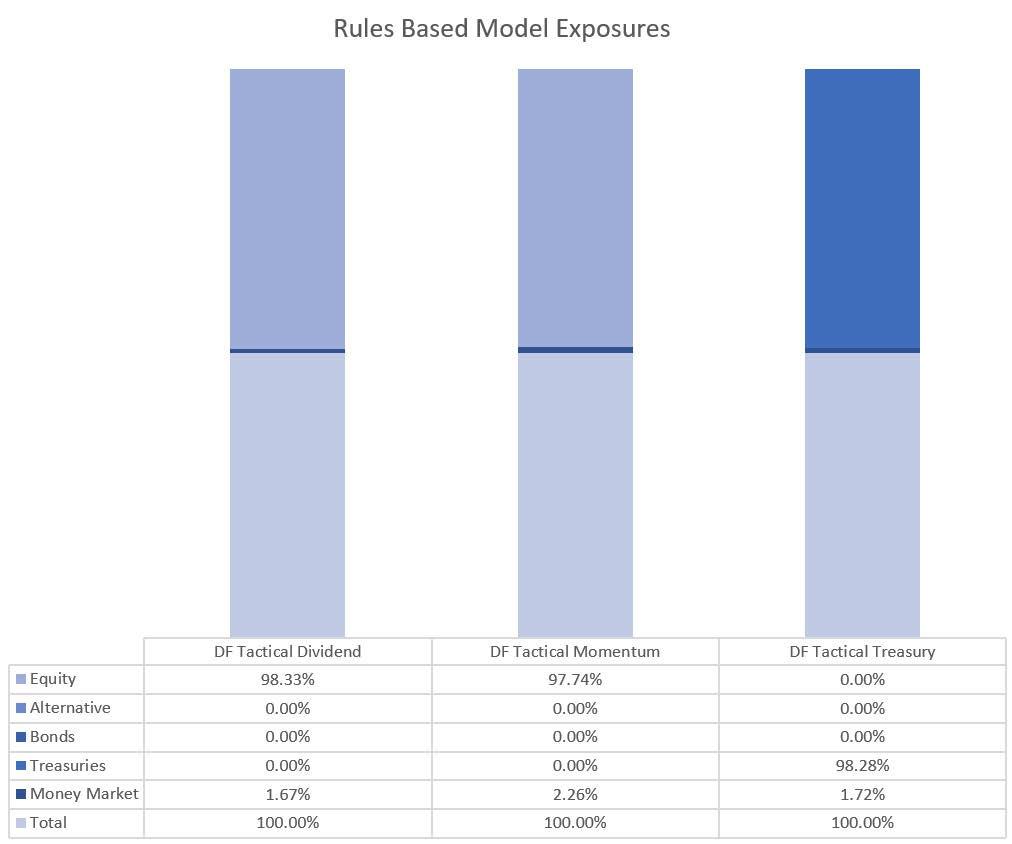
Blended Portfolios
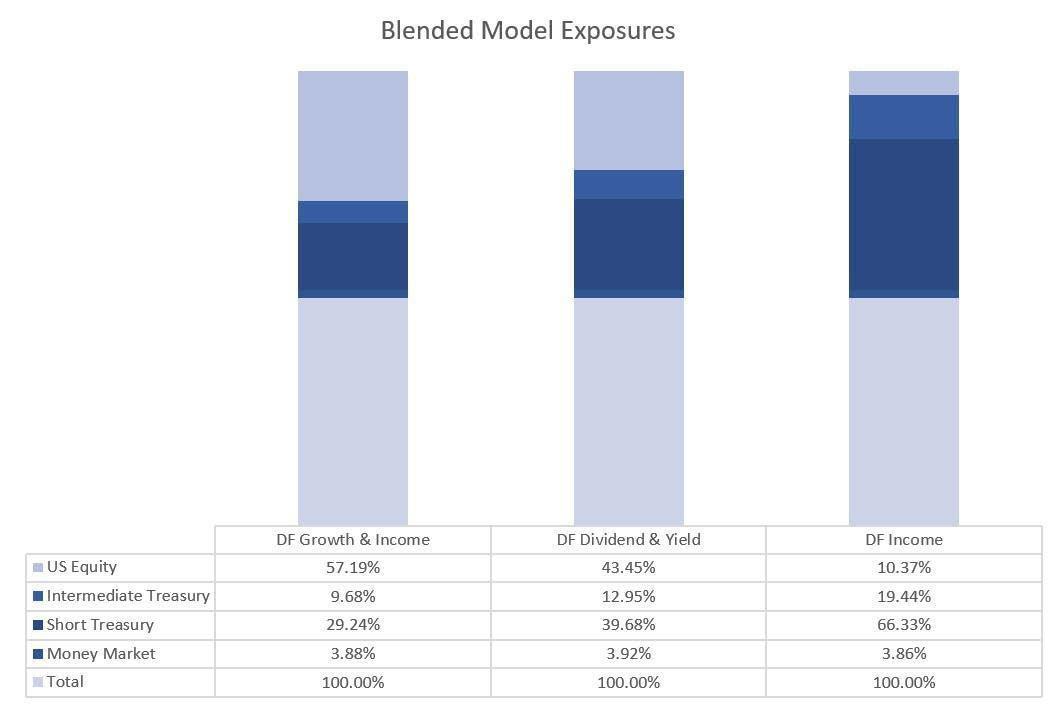
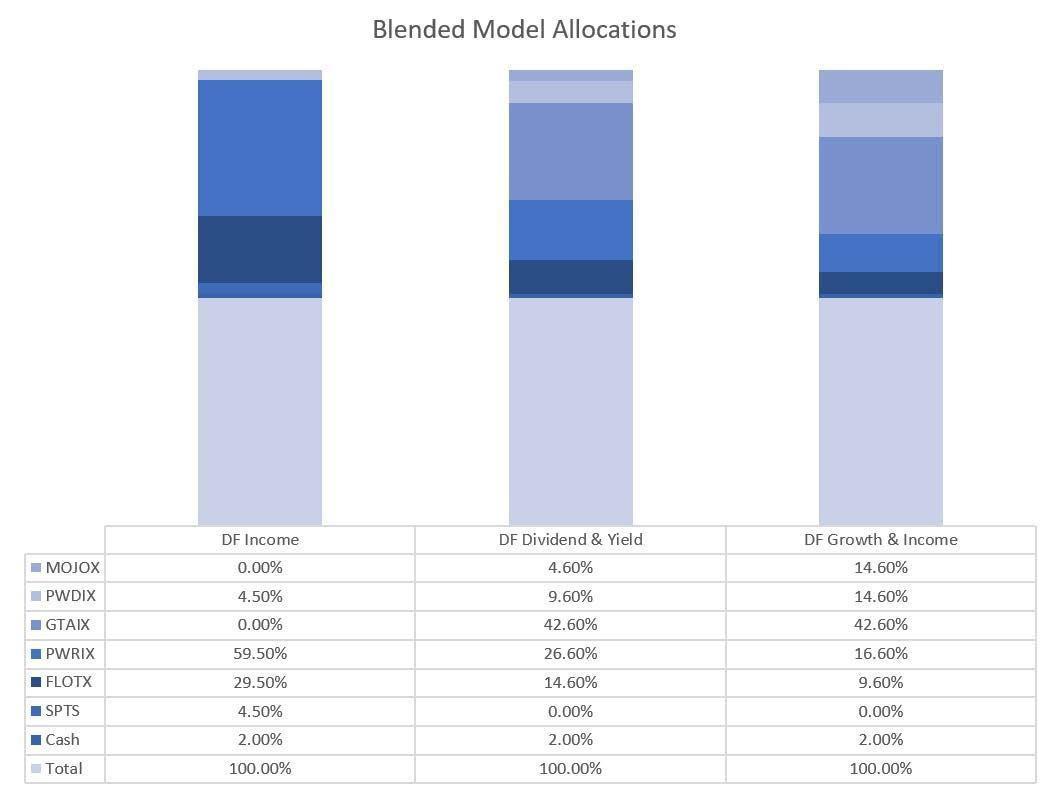
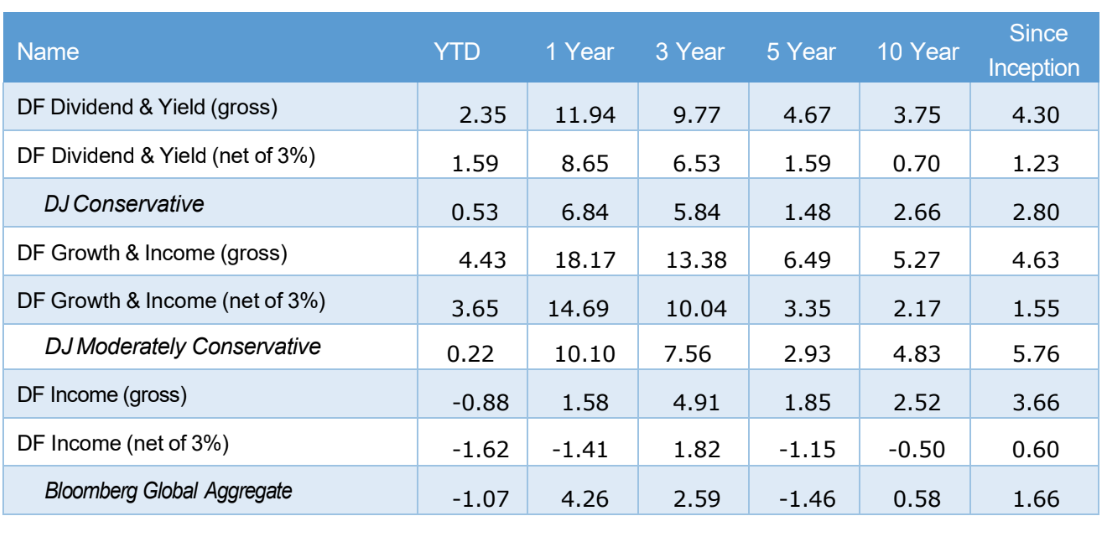
The blended portfolios combine our global macro fundamental research with our rules-based technical strategies. Currently, we are favoring U.S. equities and are tilted toward higher-yielding credit, with some exposure to intermediate-term treasuries. The investment team will continue to seek tactical opportunities to increase equity exposure while remaining prepared to reduce risk if market trends reverse.
(Positioning as of 3/31/2026)
You can get more information by calling (800) 642-4276 or by emailing [email protected].

Best regards,
Jeffrey R. Thompson
Chief Executive Officer
IMPORTANT RISK INFORMATION
Past performance is no guarantee of future results. Performance prior to January 1, 2018 was earned on accounts managed at a predecessor firm, JAForlines Global. The person primarily responsible for achieving that performance continues to manage accounts at Donoghue Forlines in a substantially similar manner. The material contained herein as well as any attachments is not an offer or solicitation for the purchase or sale of any financial instrument. It is presented only to provide information on investment strategies, opportunities and, on occasion, summary reviews on various portfolio performances. The investment descriptions and other information contained in this Markets in Motion are based on data calculated by Donoghue Forlines LLC and other sources including Morningstar Direct. This summary does not constitute an offer to sell or a solicitation of an offer to buy any securities and may not be relied upon in connection with any offer or sale of securities. The views expressed are current as of the date of publication and are subject to change without notice. There can be no assurance that markets, sectors or regions will perform as expected. These views are not intended as investment, legal or tax advice. Investment advice should be customized to individual investors objectives and circumstances. Legal and tax advice should be sought from qualified attorneys and tax advisers as appropriate. The calculation and presentation of performance has not been approved or reviewed by the SEC or its staff.
The DF Global Tactical Allocation Portfolio composite was created July 1, 2009. The DF Global Tactical Income Portfolio composite was created August 1, 2014. The DF Global Tactical Growth Portfolio composite was created April 1, 2016. The DF Global Tactical Conservative Portfolio composite was created January 1, 2018. The DF Global Tactical Equity Portfolio composite was created January 1, 2018. The DF Tactical Dividend Portfolio Composite was created on January 1, 2013. The DF Tactical Treasury Portfolio was created on August 1, 2017. The DF Tactical Momentum Portfolio Composite was created March 1, 2016. The DF Dividend & Yield Portfolio Composite was created December 1, 2011. The DF Growth & Income Portfolio Composite was created January 1, 2015. The DF Income Portfolio Composite was created June 1, 2008.
Results are based on fully discretionary accounts under management, including those accounts no longer with the firm. Individual portfolio returns are calculated monthly in U.S. dollars. These returns represent investors domiciled primarily in the United States. Past performance is not indicative of future results. Performance reflects the re-investment of dividends and other earnings.
Net 3% Returns
For all portfolios, net 3% returns are presented net of a hypothetical maximum fee of three percent (3%). Actual fees applicable to an individual investor’s account will wary and no individual investor may incur a fee as high as 3%. Please consult your financial advisor for fees applicable to your account. Individual returns will vary.
Fee Schedule
The investment management fee schedule for all portfolios is: Client Assets = All Assets; Annual Fee % = 0.00%. Actual investment advisory fees incurred may vary and should be confirmed with your financial advisor.
Each portfolio includes holdings on which Donoghue Forlines may receive management fees as the advisor and/or subadvisor or from separate revenue sharing agreements. Please see the prospectuses for additional disclosures.
The investment management fee schedule for the composites is: Client Assets = All Assets; Annual Fee % = 0.00%. Actual investment advisory fees incurred may vary and should be confirmed with your financial advisor.
Investors should carefully consider the investment objectives, risks, charges, and expenses of mutual fund and ETFs. This and other information about a Fund is contained in its prospectus and should be read carefully before investing.
The DF Global Tactical Allocation Benchmark is the DJ Moderately Conservative Index. The DF Global Tactical Conservative Benchmark is the DJ Conservative Index. The DF Global Tactical Growth is the DJ Moderate Index. The DF Global Tactical Income Benchmark is the Bloomberg Tactical Aggregate Index. The DF Global Tactical Equity Benchmark is the DJ Moderately Aggressive Index. The Dow Jones Moderately Aggressive Index is a multi-asset index designed to reflect a portfolio with a moderate risk profile. it targets an 80% risk level, as measured by the downside risk of the Dow Jones Global Stock CMAC Index, over a 36-month period. This risk profile is achieved through an allocation of stocks, bonds, and cash. The Dow Jones Moderate TR Index measures the performance of returns on its total portfolios with a target risk level of moderate investors will take 60% of all stock portfolio risk. Its portfolios include three major asset classes: stocks, bonds, and cash. The weightings are rebalanced monthly to maintain the target level. The index is a subset of the global series of the Dow Jones Relative Risk Indices. The Dow Jones Moderately Conservative portfolio index is a member of the Dow Jones Relative Risk Index Series and is designed to measure a total portfolio of stocks, bonds, and cash, allocated to represent an investor’s desired risk profile. The Dow Jones Moderately Conservative Portfolio index risk level is set to 40% of the Dow Jones Global Stock CMAC Index’s downside risk (past 36 months). The Bloomberg Global Aggregate Index is a broad-based flagship benchmark that measures the investment grade, us dollar-denominated, fixed-rate taxable bond market. The index includes Treasuries, government-related and corporate securities, fixed-rate agency MBS, ABS and CMBS (agency and non-agency).
The Syntax US Net Value Index is a type of stock market index that tracks the performance of the US equity market, specifically focusing on value-oriented companies. It measures the net asset value (NAV) of a portfolio holding large-cap US equities, typically companies that are considered value-oriented. The Syntax US LargeCap 500 Index float market cap weights the 500 largest public US companies as ranked by their float market caps, subject to rank buffers and liquidity screens. Companies are defined as US According to Syntax’s proprietary country classification methodology considering regulatory filings, currencies of accounting and distribution, and tax havens. The Bloomberg US Long Treasury Index, Bloomberg US Intermediate Treasury Index, are for comparison purposes only. Bloomberg US Long Term Treasury Index measures the performance of US treasury bonds with long term maturity. The credit level for this index is investment grade. Bloomberg US Intermediate Term Treasury Index measures the performance of US treasury notes with intermediate term maturity. The credit level for this index is investment grade.
Index performance results are unmanaged, do not reflect the deduction of transaction and custodial charges or a management fee, the incurrence of which would have the effect of decreasing indicated historical performance results. You cannot invest directly in an Index. Economic factors, market conditions and investment strategies will affect the performance of any portfolio, and there are no assurances that it will match or outperform any particular benchmark.
Policies for valuing portfolios, calculating performance, and preparing compliant presentations are available upon request. For a compliant presentation and/or the firm’s list of composite descriptions, please contact 800-642-4276 or [email protected].
Donoghue Forlines LLC is a registered investment adviser with the United States Securities and Exchange Commission in accordance with the Investment Advisers Act of 1940. Registration does not imply a certain level of skill or training.
© 2026 Morningstar, Inc. All rights reserved. The information contained herein:
(1) is proprietary to Morningstar and/or its content providers; (2) may not be copied or distributed; and (3) is not warranted to be accurate, complete, or timely. Neither Morningstar nor its content providers are responsible for any damages or losses arising from any use of this information.
Source: Morningstar Direct. US SA Tactical Allocation Category. The DF Tactical Momentum SMA (formerly Donoghue Forlines Momentum SMA) (Inception: 3/1/2016) received an overall 5 star rating in the Morningstar US SA Tactical Allocation Category as of 12/31/2025 out of 273 Strategies, a 3 Year 5 star rating in the Morningstar US SA Tactical Allocation Category as of 12/31/2025 out of 273 Strategies, and a 5 Year 5 star rating in the Morningstar US SA Tactical Allocation Category as of 12/31/2025 out of 261 Strategies, based on risk-adjusted returns. Morningstar rankings are based on a Separate Account’s average annual total return relative to all separate accounts in the same Morningstar category. Separate Account performance used within the rankings, reflects certain fee waivers, without which, returns and Morningstar rankings would have been lower. The highest (or more favorable) percentile rank is 1 on the lowest (or least favorable) percentile rank is 100.
The DF Tactical Dividend SMA (formerly Donoghue Forlines Momentum SMA) (Inception: 1/1/2013) received an overall 4 star rating in the Morningstar US SA Tactical Allocation Category as of 12/31/2025 out of 273 Strategies, a 3 Year 3 star rating in the Morningstar US SA Tactical Allocation Category as of 12/31/2025 out of 273 Strategies, a 5 Year 5 star rating in the Morningstar US SA Tactical Allocation Category as of 12/31/2025 out of 261 Strategies, and a 10 Year 3 star rating in the Morningstar US SA Tactical Allocation Category as of 12/31/2025 out of 169 Strategies, based on risk-adjusted returns. Morningstar rankings are based on a Separate Account’s average annual total return relative to all separate accounts in the same Morningstar category. Separate Account performance used within the rankings, reflects certain fee waivers, without which, returns and Morningstar rankings would have been lower. The highest (or more favorable) percentile rank is 1 on the lowest (or least favorable) percentile rank is 100.
The Morningstar Rating™ for Separate Accounts, or “star rating”, is calculated for managed products (including mutual funds, variable annuity and variable life subaccounts, exchange-traded funds, closed-end funds, and separate accounts) with at least a three-year history. Exchange-traded funds and open-ended mutual funds are considered a single population for comparative purposes. It is calculated based on a Morningstar Risk- Adjusted Return measure that accounts for variation in a managed product’s monthly excess performance, placing more emphasis on downward variations and rewarding consistent performance. The top 10% of products in each product category receive 5 stars, the next 22.5% receive 4 stars, the next 35% receive 3 stars, the next 22.5% receive 2 stars, and the bottom 10% receive 1 star. The Overall Morningstar Rating for a managed product is derived from a weighted average of the performance figures associated with its three-, five-, and 10-year (if applicable) Morningstar Rating metrics. The weights are: 100% three-year rating for 36-59 months of total returns, 60% five-year rating/40% three-year rating for 60-119 months of total returns, and 50% 10-year rating/30% five-year rating/20% three-year rating for 120 or more months of total returns. While the 10-year overall star rating formula seems to give the most weight to the 10- year period, the most recent three-year period actually has the greatest impact because it is included in all three rating periods.
Morningstar ratings for separate accounts are determined quarterly and the DF Tactical Momentum SMA and the DF Tactical Dividend SMA may receive a different rating in the future. Please contact us at 800-642-4276 for the most recent Morningstar Ratings.
Donoghue Forlines believes that any questionnaire or survey used by Morningstar in the preparation of third-party ratings is structured to make it equally easy for a participant to provide favorable and unfavorable responses and is not designed or prepared to produce any predetermined result. Donoghue Forlines has compensated Morningstar in connection with using the third-party rating. Donoghue Forlines is not affiliated with Morningstar.

